


Introduction
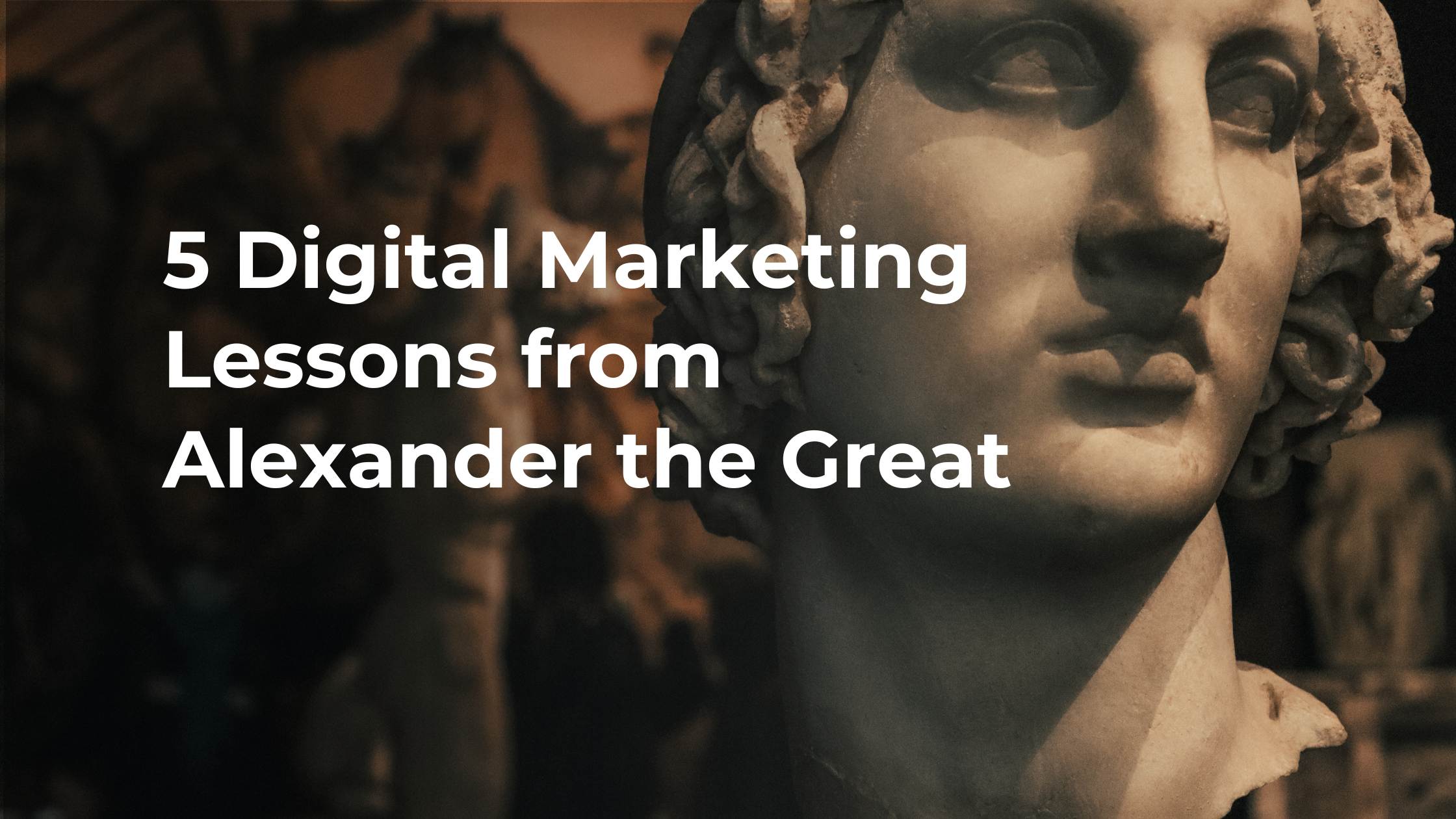
In the vast tapestry of history, Alexander the Great stands out as a beacon of ambition, strategy, and conquest.
His legacy, spanning from Greece to the borders of India, is a testament to his unparalleled military prowess and leadership.
But beyond the battlefields and the annals of history, Alexander’s strategies offer profound insights for the modern world, particularly in the realm of digital marketing.
Just as he mastered the art of warfare by understanding and adapting to the ever-changing dynamics of his time, we too can elevate our digital marketing campaigns by drawing inspiration from his tactics. Let’s delve into this intriguing intersection of ancient strategy and modern marketing.
Lesson 1: Mastery in Knowing the Audience

At the heart of Alexander’s success was his uncanny ability to understand people. He didn’t just know his enemies in terms of their military capabilities; he understood their cultures, their motivations, and their fears. This deep insight allowed him to tailor his strategies, ensuring each move had maximum impact.
Similarly, in digital marketing, truly understanding your audience is the cornerstone of success. It’s not just about demographics or browsing habits; it’s about delving deep into their desires, needs, and pain points. For instance, consider the rise of personalized marketing. Studies have shown that personalized content can lead to a 20% increase in sales. This isn’t just about addressing the user by their first name; it’s about delivering content that resonates with their unique journey and preferences.
In a world inundated with information, cutting through the noise is more important than ever. It’s not enough to simply broadcast a message; it needs to be tailored, relevant, and timely. By truly understanding our audience, we can craft campaigns that not only capture attention but also inspire action.
Lesson 2: Embracing the Power of Innovation

Alexander’s campaigns were not just a testament to his military genius but also his relentless pursuit of innovation. He never settled for traditional methods. Instead, he constantly sought to revolutionize his tactics, integrating new technologies and strategies that often caught his adversaries off guard. This forward-thinking approach was a significant factor in his numerous victories.
In today’s digital marketing landscape, the same principle applies. The pace of change is rapid, and those who fail to innovate risk obsolescence. For instance, according to a report by the Content Marketing Institute, 72% of marketers believe that staying updated with current trends is crucial for their organizational success. This underscores the importance of being adaptable and forward-thinking in our strategies.
Take, for example, the meteoric rise of video content. A study by HubSpot revealed that 54% of consumers want to see more video content from brands they support. Recognizing this shift, brands that pivoted to video marketing saw a significant boost in engagement. Platforms like TikTok, which amassed over 2 billion downloads in just five years, have become goldmines for marketers aiming to reach younger demographics.
Another case in point is the evolution of voice search. According to ComScore, it’s predicted that 50% of all searches will be voice searches by 2023. Brands that are already optimizing for voice search are positioning themselves at the forefront of this shift, ensuring they don’t miss out on this burgeoning segment of users.
In essence, innovation in digital marketing isn’t just about adopting the latest tools or platforms. It’s about anticipating where the market is headed and positioning oneself proactively. Just as Alexander always stayed a step ahead of his enemies through his innovative tactics, marketers too must constantly evolve, ensuring they remain at the cutting edge of their industry.
Lesson 3: The Boldness in Taking Risks

Alexander’s audacity is legendary. Time and again, he took risks that many deemed reckless. Yet, it was this very boldness, combined with his strategic acumen, that led to some of his most resounding victories. Whether it was crossing the treacherous Gedrosian Desert or facing the mighty Persian Empire head-on, Alexander’s willingness to venture into the unknown set him apart.
In the world of digital marketing, a similar boldness can be the difference between a campaign that fades into obscurity and one that sets the internet ablaze. However, it’s essential to note that taking risks doesn’t mean acting without data or strategy. It’s about making informed decisions, even if they go against the grain.
A striking example of this is the “Share a Coke” campaign by Coca-Cola. In a move that many considered risky, the company replaced its iconic logo on bottles with people’s names. The result? A 2% increase in U.S. sales after a decade of decline, with over 150 million personalized bottles sold. The campaign was a masterstroke in personalization, making consumers feel uniquely connected to the brand.
Another case is the “Dumb Ways to Die” campaign by Metro Trains in Melbourne. Instead of a standard safety announcement, they released a catchy song featuring animated characters dying in increasingly ridiculous ways. The campaign went viral, garnering over 200 million views on YouTube. More importantly, it led to a 30% reduction in “near-miss” accidents in the months following its release.
Data from the Content Marketing Institute shows that 73% of organizations that are willing to take risks in their content marketing see better results than their more conservative counterparts. This underscores the potential rewards of boldness in digital campaigns.
In conclusion, while taking risks in digital marketing can be daunting, it’s often these very campaigns that resonate most with audiences. By being bold, thinking outside the box, and backing decisions with data and strategy, marketers can create campaigns that not only capture attention but also drive tangible results.
Lesson 4: Alexander changed the landscape everywhere he showed up

Everywhere Alexander set foot, he left an indelible mark. He didn’t just conquer territories; he transformed them, introducing new governance systems, cultures, and infrastructures. His influence was so profound that regions he touched underwent significant socio-economic and cultural shifts, many of which are still evident today.
Similarly, in the realm of digital marketing, it’s not enough to merely have a presence. Brands that truly stand out are those that bring about transformative changes in their industry, setting new benchmarks and reshaping consumer expectations.
Consider the digital transformation of the retail industry. According to a report by BigCommerce, e-commerce is growing 23% year-over-year, with 51% of Americans preferring to shop online. Brands that recognized this shift early and invested in robust online platforms have reaped significant rewards. A prime example is Amazon. Starting as an online bookstore, it transformed the retail landscape, setting new standards for convenience, selection, and customer service. Today, Amazon accounts for nearly 50% of the U.S. e-commerce market, a testament to its transformative impact.
Another transformative trend is the rise of interactive content. According to a study by Demand Gen Report, 93% of marketers agree that interactive content is effective in educating buyers, compared to just 70% for static content. Brands that have embraced this trend, like BuzzFeed with its interactive quizzes, have seen engagement rates soar. Such content not only captivates users but also fosters a deeper connection, making them more likely to return.
Furthermore, the sustainability movement in marketing showcases how brands can drive industry-wide change. A Nielsen report highlighted that 73% of global consumers would change their consumption habits to reduce environmental impact. Brands like Patagonia, with their commitment to sustainability, have not only garnered consumer loyalty but have also pushed competitors to adopt more eco-friendly practices.
In essence, true leaders in digital marketing don’t just adapt to the landscape; they reshape it. By introducing innovative strategies, setting new standards, and challenging the status quo, they ensure their brand remains at the forefront of industry evolution.
Lesson 5: Alexander was smart and persistent

Alexander’s conquests were not just a result of brute force. They were a blend of his sharp strategic mind and an unyielding spirit that faced challenges head-on. His intelligence allowed him to devise masterful tactics, while his tenacity ensured he saw them through, even in the face of overwhelming odds.
In the digital marketing arena, this combination of intelligence and tenacity is paramount. Success is not just about having a brilliant strategy; it’s about executing it with unwavering determination, even when faced with obstacles.
A study by McKinsey & Company revealed that while 83% of executives believe it’s important to reinvent their business model, only 23% have actually taken steps to do so. This gap underscores the difference between having a vision (intelligence) and taking actionable steps to realize it (tenacity).
Take the story of Airbnb. In its early days, the platform struggled to gain traction. Instead of giving up, the founders decided to pivot their strategy. They invested in professional photography for their listings, believing that high-quality images would make a difference. This seemingly simple change led to a 2-3x increase in bookings, turning Airbnb into the global giant it is today. Their ability to intelligently identify a problem, coupled with the tenacity to implement a solution, was key to their success.
Another example is the rise of content marketing. According to the Content Marketing Institute, while 91% of B2B marketers use content marketing, only 9% believe their strategy is excellent. This highlights a significant opportunity for brands that are both smart in crafting their content strategy and persistent in refining and optimizing it over time. HubSpot, for instance, grew its customer base by consistently producing valuable content, optimizing its strategies based on data, and demonstrating tenacity in its approach.
Moreover, data from Statista shows that website conversion rates globally hover around 2.58%. This means that for many businesses, a significant portion of their audience remains untapped. Brands that combine data-driven insights with persistent testing and optimization can uncover new opportunities and achieve higher conversion rates.
In conclusion, the digital landscape is rife with challenges, from shifting consumer behaviors to evolving technologies. However, by blending strategic intelligence with relentless tenacity, brands can navigate these complexities, ensuring they not only survive but thrive in this dynamic environment.
Conclusion
In conclusion, the digital marketing lessons we can learn from Alexander the Great are many. He was a successful leader who conquered vast territories and left a legacy that has endured for over two thousand years. By applying the lessons, we can learn from Alexander the Great, businesses can build effective digital marketing strategies that will help them achieve their objectives and succeed in the competitive online landscape.
Alexander’s ability to know his audience, embrace innovation, take risks, change the landscape everywhere he showed up, and be smart and persistent are all traits that businesses can emulate in their digital marketing efforts. By knowing their audience, businesses can create content and campaigns that resonate with them and drive engagement. By embracing innovation and taking risks, businesses can differentiate themselves from their competitors and find new opportunities for growth and innovation. By striving to make a lasting impact and being smart and persistent, businesses can overcome challenges and achieve long-term success in their digital marketing efforts.
It is also essential to recognize that persistence needs to be accompanied by patience. Building a successful digital presence takes time, and results may not come as quickly as one would hope. Being persistent without patience can lead to frustration and burnout, which can ultimately hinder success. Therefore, it is essential to maintain a balance between being persistent in pursuing your goals while also being patient enough to allow time for strategies to take effect.
In summary, businesses can learn a lot from Alexander the Great when it comes to digital marketing. By understanding their audience, embracing innovation, taking risks, making a lasting impact, and being smart and persistent, businesses can build effective digital marketing strategies that will help them achieve their objectives and succeed in the competitive online landscape.